
The first time I tasted Tteokguk, I was enveloped in a comforting embrace of warmth and nostalgia. This traditional Korean Rice Cake Soup, with its shimmering clear broth, brought memories of family gatherings and joyful celebrations right to my kitchen. Each bowl is a delightful harmony of flavors, featuring tender rice cakes and savory shredded beef that dance together in a light yet satisfying broth.
As winter settles in and the chill outside beckons for warmth, there’s no better way to soothe the soul than a steaming bowl of Tteokguk. This dish is not just a feast for the palate; it’s steeped in tradition, often enjoyed during the Korean New Year to symbolize a fresh start and good fortune for the year ahead.
The best part? It’s surprisingly simple to prepare, making it a perfect choice for busy weeknights or when you’re in need of a comforting hug in a bowl. So, grab your ingredients and let’s dive into this heartwarming recipe that promises to be a favorite for years to come!

Why is Tteokguk the ultimate comfort food?
Warmth: This delightful soup radiates comfort with its light broth and tender rice cakes, providing perfect nourishment on chilly days.
Tradition: Tteokguk is more than a meal; it represents family gatherings and celebrations, wrapping you in nostalgic warmth.
Simplicity: With straightforward ingredients and easy preparation, even novice cooks can master this heartwarming dish.
Versatility: Customize with chicken or add mandu for a heartier version, ensuring there’s something for everyone!
Nutrient-rich: Packed with protein and gluten-free, Tteokguk is not just satisfying; it also fits various dietary preferences.
Embrace the cozy vibe of this soul-soothing soup that will surely bring joy to your table!
Tteokguk Ingredients
For the Broth
- Beef Brisket/Rump – Provides rich flavor for the broth. Substitution: Flank steak can be used for a leaner option.
- Korean Radish/Daikon Radish – Adds natural sweetness and depth to the broth. Note: Korean radish is preferred for its distinct taste.
- Dried Sea Kelp (Dashima) – Infuses umami flavor into the broth. Substitution: Use a small piece of kombu if unavailable.
- Onion – Builds base flavor in the broth. Prep Note: Halve before adding to the broth.
- Garlic – Adds aromatic depth. Note: Fresh garlic is preferred for stronger flavor.
- Water – Essential for cooking the broth. Note: Use filtered or cold water for best results.
- Korean Soup Soy Sauce (Gukganjang) – Widens flavor profile without discoloring the broth. Substitution: Use low-sodium soy sauce as a last resort.
- Korean Tuna Sauce – Adds umami. Note: Optional, for those wanting extra depth of flavor.
- Salt – Balances the broth’s flavor. Note: Adjust according to taste.
For the Rice Cakes
- Rice Cakes (Tteok) – Main component; provides texture. Prep Note: Soak if frozen before boiling.
For Garnishing
- Sesame Oil – Adds nutty aroma and flavor. Note: Drizzle on the finished soup for additional flavor.
- Roasted Seaweed – Optional garnish for texture. Note: Adds crunch and flavor when crumbled.
- Green Onions – Fresh garnish for brightness. Prep Note: Finely chop for serving.
- Eggs – Optional garnish; creates visual appeal. Note: Cook separately as ribbons or beat into broth for swirling.
How to Make Tteokguk
-
Prepare Beef Stock:
In a large pot, combine beef brisket, Korean radish, dried sea kelp, onion, and garlic. Bring it to a boil over medium heat, then reduce the heat and let it simmer for 45-60 minutes until the beef is tender. Once done, strain the broth to remove solids, and season with Korean soup soy sauce and salt to taste. -
Season Beef:
Shred the cooled beef into bite-sized pieces. In a bowl, gently mix the shredded beef with soy sauce, minced garlic, sesame oil, and toasted sesame seeds, allowing the flavors to meld beautifully. -
Cook Rice Cakes:
In a separate pot, bring water to a boil and add the soaked rice cakes (tteok). Cook for about 5 minutes or until they are tender; then, drain and set aside. -
Prepare Egg Garnish (Optional):
Beat the egg whites and yolks separately. In a non-stick skillet, cook the egg whites and yolks thinly until they form ribbons. Remove and slice into strips for garnishing. -
Assemble and Serve:
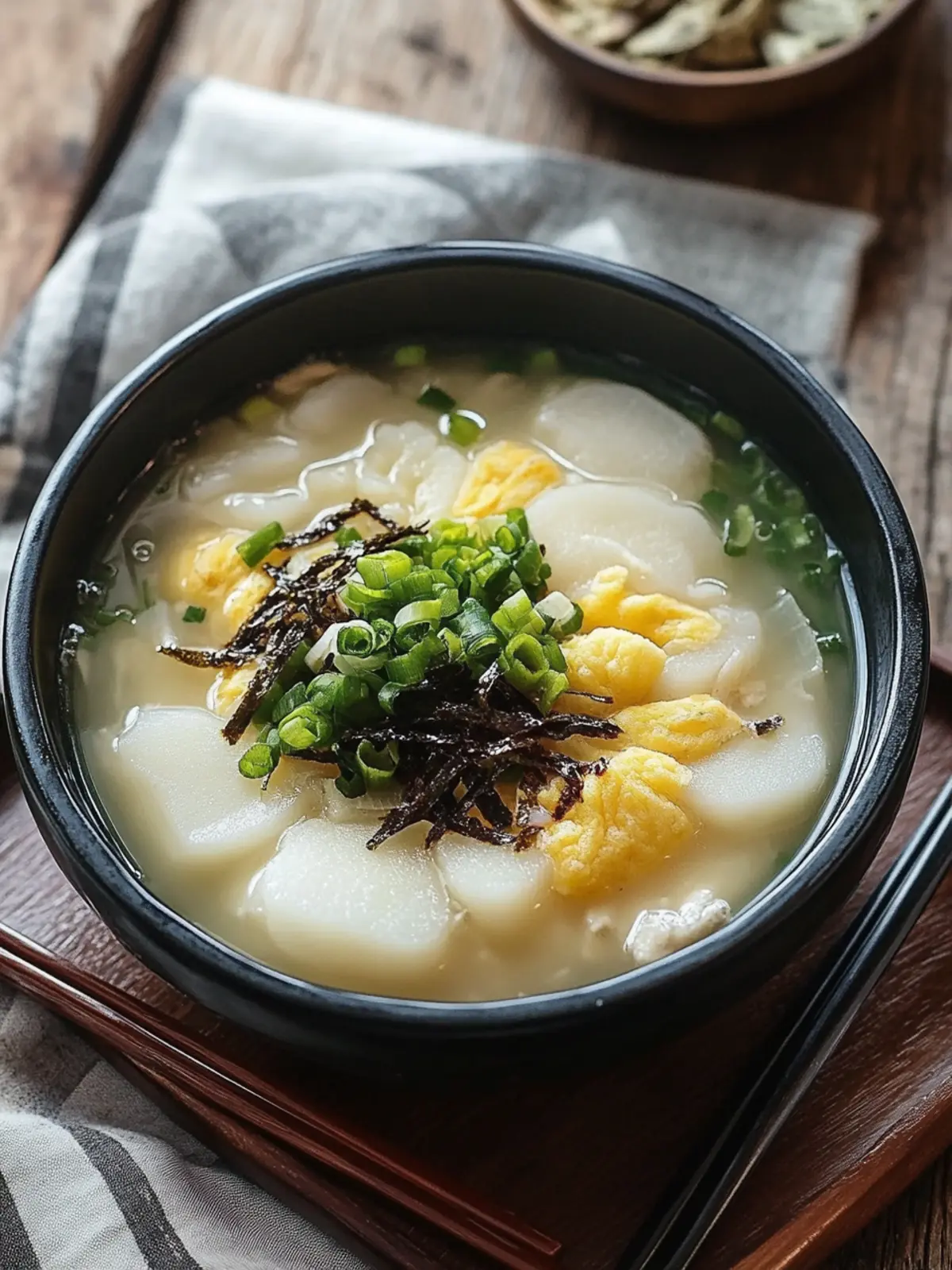
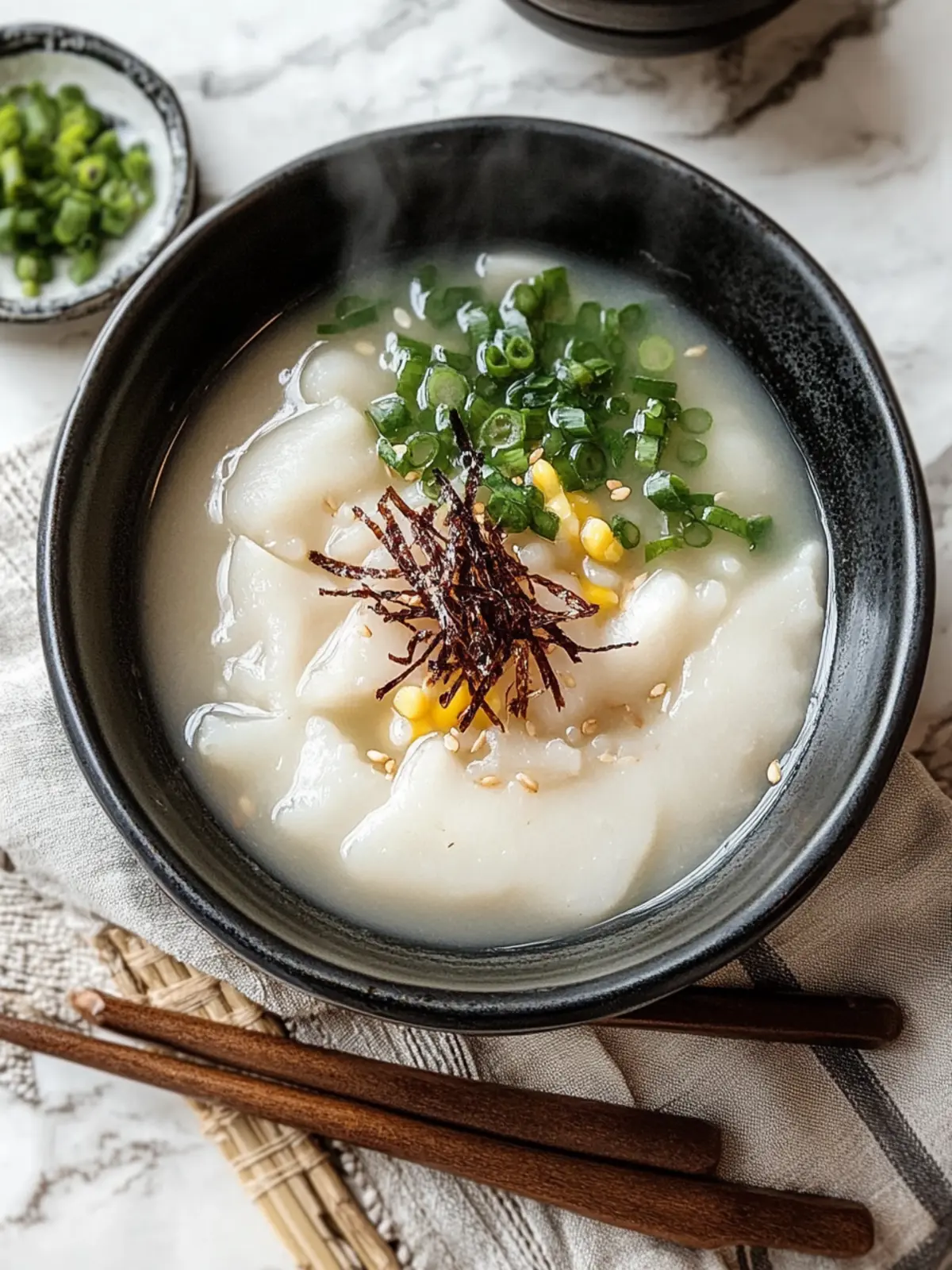
In bowls, place a portion of the cooked rice cakes. Ladle warm broth over them, and top with the seasoned shredded beef, egg ribbons, chopped green onions, and crumbled roasted seaweed. Serve immediately, complemented by a side of kimchi for that perfect touch!
Optional: Drizzle a bit of sesame oil over the finished dish for an extra layer of flavor.
Exact quantities are listed in the recipe card below.
How to Store and Freeze Tteokguk
Fridge: Store leftover Tteokguk in an airtight container for up to 3 days. Keep the rice cakes separate to retain their texture.
Freezer: For longer storage, freeze the broth without rice cakes in freezer-safe containers for up to 2 months. Thaw overnight in the fridge before reheating.
Reheating: Reheat the broth in a pot over medium heat until hot. Add fresh rice cakes and heat until they are tender, usually about 5 minutes.
Leftover Beef: Shredded beef can also be stored in the fridge for up to 3 days or frozen for up to 2 months; just make sure it’s sealed well to prevent freezer burn.
Tteokguk Variations & Substitutions
Feel free to get creative and personalize your Tteokguk, making it uniquely yours with these simple twists!
- Chicken Swap: Replace beef with tender chicken for a lighter alternative that still packs plenty of flavor.
- Vegetarian Option: Ditch the meat! Use mushroom broth and add shiitake mushrooms for umami richness without the animal protein.
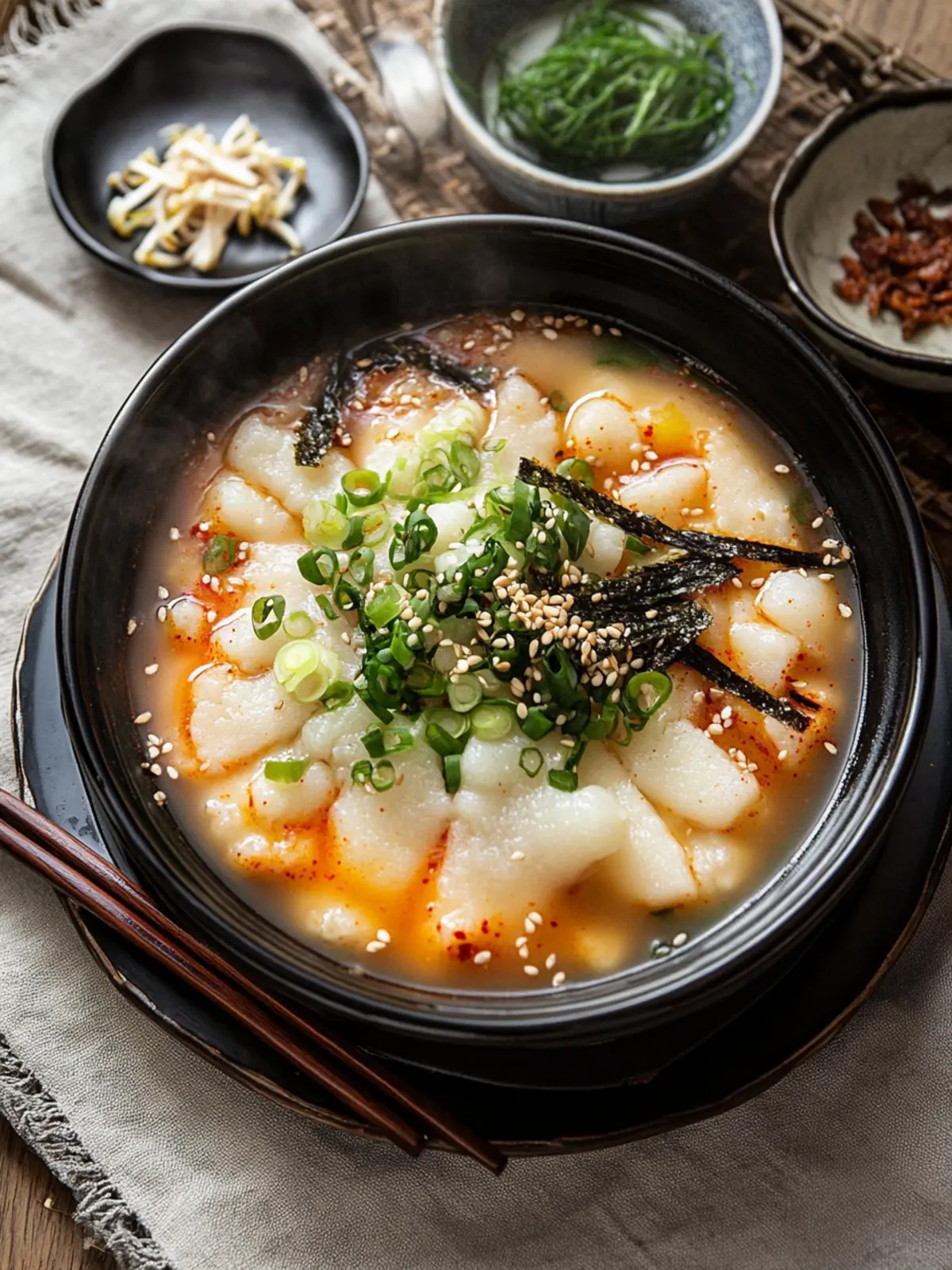
- Spicy Kick: Toss in some gochujang or sliced fresh chili peppers to elevate the heat level and awaken your taste buds.
- Fresh Herbs: Enhance the broth’s aroma by incorporating fresh herbs like cilantro or parsley for a fresh twist in flavor. They add a delightful aroma!
- Flavor Boost: Infuse your broth with ginger slices for a hint of warmth and zest that complements the savory notes beautifully.
- Savory Mandu: Add Korean dumplings (mandu) while simmering for an indulgent and heartier meal that feels like a feast.
- Gluten-Free Rice Cakes: If you need a gluten-free option, look for specialized rice cakes made from glutinous rice flour.
- Colorful Vegetables: Add finely sliced carrots or spinach for a vibrant pop of color and nutrition, transforming your Tteokguk into a rainbow of deliciousness.
Let your culinary creativity shine as you explore these variations!
Expert Tips for Tteokguk
- Clear Broth: Cook rice cakes separately to prevent excess starch from clouding the broth, ensuring a pristine finish.
- Kelp Timing: Remove the dried sea kelp after boiling to avoid a bitter taste, maximizing the broth’s flavor profile.
- Tender Beef: Allow beef to cool before shredding; this makes it easier to handle and enhances texture in your Tteokguk.
- Fresh Ingredients: Utilize fresh garlic and high-quality ingredients for a more vibrant taste, elevating the entire dish experience.
- Garnish Wisely: Layer your toppings thoughtfully—green onions and roasted seaweed not only add flavor but also bring visual appeal to your Tteokguk.
Make Ahead Options
These Tteokguk (Korean Rice Cake Soup) are perfect for meal prep enthusiasts! You can make the beef broth up to 3 days in advance, allowing the flavors to deepen while refrigerated. Simply cook the beef, radish, and aromatics as per the instructions, then strain the broth and store it in an airtight container. To keep the rice cakes perfectly chewy, store them separately after boiling; they can be prepped up to 24 hours before serving. When you’re ready to enjoy, just reheat the broth, add the cooked rice cakes, and top with seasoned beef and garnishes for a cozy meal that feels fresh and satisfying.
What to Serve with Tteokguk?
As you savor your warm bowl of Tteokguk, consider complementing it with delightful sides that elevate this meal into a feast.
- Kimchi: A staple in Korean cuisine, its tangy and spicy flavors harmonize wonderfully with the comforting broth. This classic pairing not only adds a kick but also boosts the meal’s nutritional value.
- Pickled Vegetables: Bright and crunchy, these provide a refreshing contrast to the rich soup, offering delightful textures and flavors that cleanse the palate.
- Savory Pancakes (Jeon): Made with vegetables or seafood, these crispy delights bring a satisfying crunch that enhances the soup’s soft texture and keeps every bite interesting.
- Steamed Rice: For those who love to soak up every last drop of broth, a warm bowl of plain steamed rice allows you to enjoy the clear soup to its fullest—pure comfort!
- Korean Fried Chicken: For a special treat, the crispy, flavorful chicken pairs beautifully with Tteokguk, adding a crunchy element that enhances the meal experience.
- Hot Tea: A light, warm tea such as barley tea or green tea can help cleanse the palate while keeping you cozy, rounding out the meal perfectly.
These pairing options will create a delightful experience, turning your bowl of Tteokguk into a full-blown feast that warms the heart and soul.
Tteokguk (Korean Rice Cake Soup) Recipe FAQs
How do I select the best ingredients for Tteokguk?
Absolutely! When selecting the beef, look for brisket or rump with good marbling to ensure a flavorful broth. For the radish, choose a firm Korean radish without dark spots for the best taste. Fresh garlic is key, as it enhances the soup’s aroma and flavor! Also, make sure your rice cakes are pliable; if they’re frozen, give them a soak in water before cooking.
How should I store leftover Tteokguk?
Very! Store the leftover Tteokguk in an airtight container in the refrigerator. It’s best to keep the broth and rice cakes separate to avoid them becoming mushy. They should stay good for 3 to 4 days. Reheating with fresh rice cakes added is the secret to keeping them tender!
Can I freeze Tteokguk, and if so, how?
Absolutely! Freeze the broth in freezer-safe containers (up to 3 months) after letting it cool completely. Avoid freezing the rice cakes, as they can become gummy. When ready to enjoy, simply thaw the broth in the fridge overnight and reheat on the stove. Add fresh or previously soaked rice cakes, and simmer until they’re heated through, about 5 minutes.
What if my broth ends up cloudy?
Oh no! If you find your broth is cloudy, it’s usually due to excess starch from the rice cakes. To prevent this in the future, always cook the rice cakes separately. If you’ve already made it, try straining the broth again through a fine mesh sieve to clarify it further. A gentle simmer before serving can help blend those flavors beautifully!
Is Tteokguk suitable for those with gluten allergies?
Yes! Tteokguk can be made gluten-free quite easily. Simply use gluten-free soy sauce as an alternative to Korean soup soy sauce (Gukganjang), ensuring all ingredients are certified gluten-free. This way, you can savor the comforting goodness of this traditional dish without worry!
Can I add different proteins to Tteokguk?
Absolutely! For a lighter version, you can substitute the beef with chicken or even tofu for a vegetarian option. If you’re feeling adventurous, incorporating mandu (Korean dumplings) can also add a delightful richness to your soup. The more the merrier!
Tteokguk: Cozy Korean Rice Cake Soup for Ultimate Comfort
Ingredients
Equipment
Method
- In a large pot, combine beef brisket, Korean radish, dried sea kelp, onion, and garlic. Bring it to a boil over medium heat, then reduce the heat and let it simmer for 45-60 minutes until the beef is tender. Once done, strain the broth to remove solids, and season with Korean soup soy sauce and salt to taste.
- Shred the cooled beef into bite-sized pieces. In a bowl, gently mix the shredded beef with soy sauce, minced garlic, sesame oil, and toasted sesame seeds, allowing the flavors to meld beautifully.
- In a separate pot, bring water to a boil and add the soaked rice cakes (tteok). Cook for about 5 minutes or until they are tender; then, drain and set aside.
- Beat the egg whites and yolks separately. In a non-stick skillet, cook the egg whites and yolks thinly until they form ribbons. Remove and slice into strips for garnishing.
- In bowls, place a portion of the cooked rice cakes. Ladle warm broth over them, and top with the seasoned shredded beef, egg ribbons, chopped green onions, and crumbled roasted seaweed. Serve immediately, complemented by a side of kimchi for that perfect touch!