
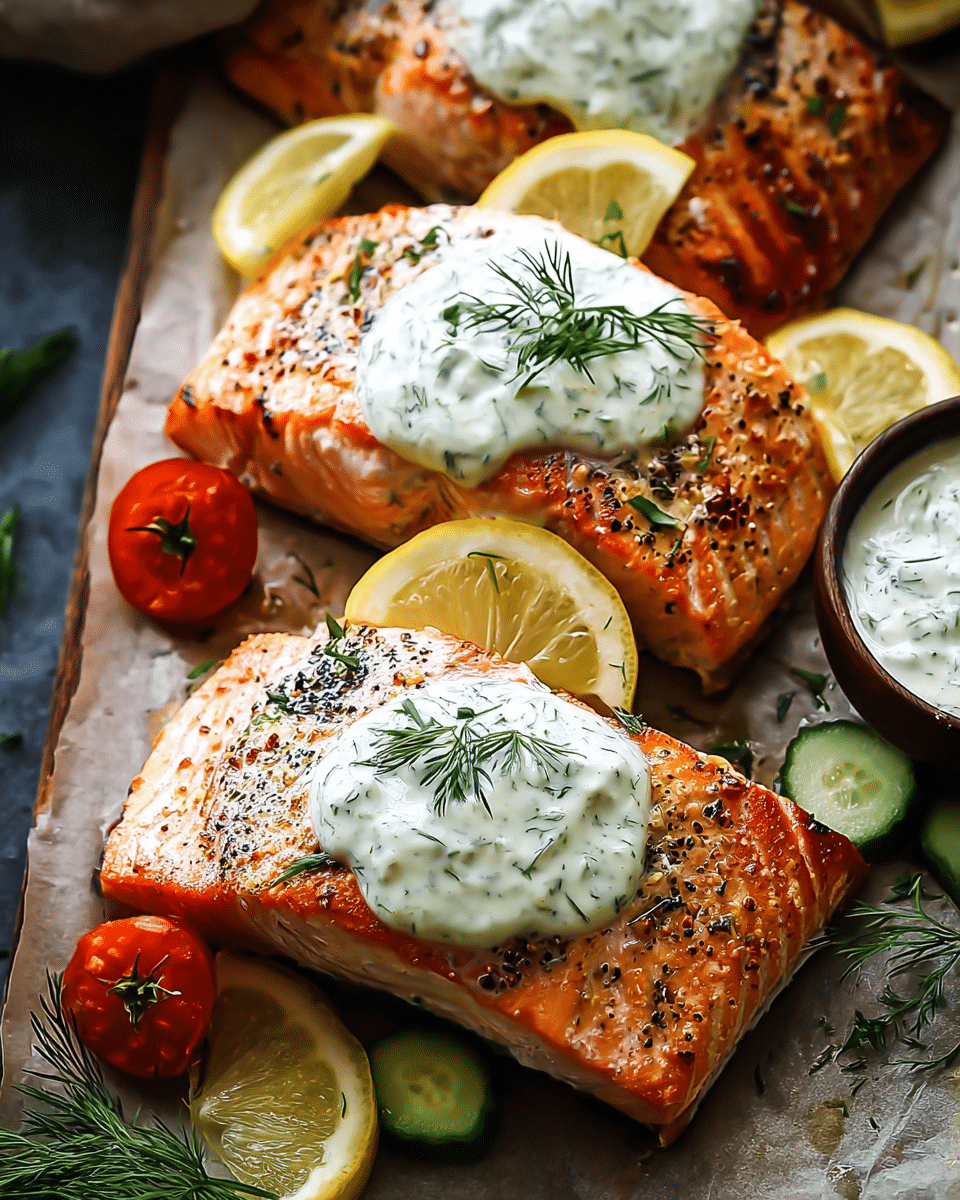
Baked salmon with creamy dill sauce is the kind of recipe every home cook needs: quick enough for a weeknight, pretty enough for guests, and full of fresh, bright flavor. Tender salmon fillets are brushed with olive oil, seasoned with garlic powder, paprika, salt, and pepper, then baked under thin lemon slices until moist and flaky. A cool dill sauce made with sour cream, mayonnaise, lemon juice, Dijon mustard, garlic, and fresh dill brings everything together.
This dish feels restaurant-worthy, but the method is simple. You do not need complicated techniques, specialty tools, or a long list of ingredients. In about 25 minutes, baked salmon with creamy dill sauce gives you a balanced dinner that pairs beautifully with rice, roasted vegetables, mashed potatoes, asparagus, quinoa, or a crisp green salad.
What Makes This Recipe Special
Baked salmon with creamy dill sauce works because it balances richness with freshness. Salmon has a naturally buttery texture, while lemon, Dijon, and dill cut through that richness with tangy, herb-filled brightness. The result is creamy without feeling heavy and flavorful without covering up the taste of the fish.
It is also a flexible recipe. Serve it as a healthy family dinner, plate it for a holiday meal, or turn leftovers into a salad or wrap the next day. Because the sauce is mixed separately, everyone can add as much or as little as they like.
Ingredients
For the Salmon
4 salmon fillets, about 6 ounces each
2 tablespoons olive oil
Salt and black pepper, to taste
1 teaspoon garlic powder
1 teaspoon paprika
1 lemon, thinly sliced
For the Creamy Dill Sauce
1/2 cup sour cream
1/4 cup mayonnaise
1 tablespoon lemon juice
1 teaspoon Dijon mustard
2 tablespoons fresh dill, chopped
1 garlic clove, minced
Salt and black pepper, to taste
How to Make Baked Salmon with Creamy Dill Sauce
Preheat the oven to 400°F, or 200°C. Line a baking sheet with parchment paper so the fish releases easily and cleanup stays simple.
Place the salmon fillets on the prepared baking sheet, skin-side down if your fillets have skin. Drizzle with olive oil, then season evenly with salt, black pepper, garlic powder, and paprika. Arrange lemon slices over the top of each fillet.
Bake for 12 to 15 minutes, depending on the thickness of the fillets. The salmon is ready when it flakes easily with a fork and looks moist in the center. Avoid overbaking, since salmon can dry out quickly once it passes the tender stage.
While the fish bakes, make the sauce. In a small bowl, stir together sour cream, mayonnaise, lemon juice, Dijon mustard, chopped fresh dill, minced garlic, salt, and black pepper. Mix until smooth and creamy. Taste and adjust with more lemon juice, dill, or pepper if needed.
Serve baked salmon with creamy dill sauce immediately. Spoon the sauce generously over the hot salmon, or serve it on the side for dipping.
Recipe Tips for the Best Salmon
Use fillets that are similar in thickness so they cook at the same pace. If one piece is much thinner, check it early and remove it as soon as it flakes.
Fresh dill gives the sauce its clean, bright flavor. Dried dill can work in a pinch, but fresh dill makes baked salmon with creamy dill sauce taste lighter and more vibrant.
Do not skip the lemon slices. They gently perfume the salmon as it bakes and add a fresh citrus note that complements the dill sauce.
Let the salmon rest for a minute before serving. This helps the juices settle and keeps the flakes tender.
Creamy Dill Sauce Variations
For a lighter sauce, replace all or part of the sour cream with plain Greek yogurt. This gives the sauce extra tang and adds protein while keeping the texture creamy.
For more garlic flavor, use two minced garlic cloves or add a pinch of garlic powder. For a subtle sweetness, stir in 1/2 teaspoon honey. For mild heat, add a small pinch of red pepper flakes or cayenne.
You can also make the sauce more lemony by adding a little lemon zest. This is especially good when serving baked salmon with creamy dill sauce alongside steamed asparagus, broccoli, or a green salad.
What to Serve with Baked Salmon with Creamy Dill Sauce
This recipe pairs well with simple sides that let the salmon shine. For a wholesome plate, serve it with quinoa and steamed broccoli. For classic comfort, add mashed potatoes and roasted carrots. For a lighter dinner, place the salmon over mixed greens with cucumber, tomatoes, and extra dill sauce as a dressing.
Rice is another easy choice. Steamed jasmine rice, brown rice, or lemon rice all soak up the creamy dill sauce nicely. Roasted vegetables such as zucchini, green beans, Brussels sprouts, and asparagus also work beautifully.
For a low-carb meal, serve baked salmon with creamy dill sauce with cauliflower rice, zucchini noodles, or a crunchy cucumber salad.
Storage and Reheating
Store leftover salmon in an airtight container in the refrigerator for up to three days. Keep the sauce in a separate sealed container for three to four days so it stays fresh and creamy.
To reheat, place the salmon in a low oven at 275°F, or 135°C, until warmed through. You can also microwave it briefly at reduced power. Heat gently and stop as soon as it is warm, because too much heat can make the fish dry.
Leftover baked salmon with creamy dill sauce is excellent in salads, grain bowls, wraps, or open-faced sandwiches. Flake the chilled salmon and add a spoonful of sauce for a quick lunch.
Nutrition Benefits
Salmon is naturally rich in protein and omega-3 fatty acids, making it a satisfying choice for a nourishing dinner. It also provides vitamin B12, vitamin D, and selenium. Dill adds fresh flavor, while lemon juice brings brightness without needing extra salt or heavy seasoning.
Because this recipe is baked instead of fried, it uses only a small amount of oil. That makes baked salmon with creamy dill sauce feel indulgent while still fitting into a balanced meal plan.
Common Mistakes to Avoid
The most common mistake is overcooking the salmon. Start checking around 12 minutes, especially if your fillets are not very thick. The fish should flake easily but still look juicy.
Another mistake is making the sauce too far ahead without tasting it again before serving. Dill and garlic become stronger as they sit, so stir the sauce and adjust with a small splash of lemon juice if it needs freshening.
Finally, avoid covering the salmon completely with sauce before baking. The creamy dill sauce is meant to be served after the fish is cooked, giving you a cool, tangy contrast to the warm, flaky salmon.
Frequently Asked Questions
Can I use frozen salmon?
Yes. Thaw the salmon completely in the refrigerator, pat it dry, then season and bake as directed. Removing excess moisture helps the seasoning stick and improves texture.
Can I make the sauce ahead of time?
Yes. The sauce can be made up to one day ahead and stored in the refrigerator. Stir before serving and adjust the seasoning if needed.
Can I use Greek yogurt instead of sour cream?
Yes. Greek yogurt is a great substitute for sour cream. It creates a tangier, lighter sauce that still works well with salmon.
How do I know when salmon is done?
The salmon should flake easily with a fork and be moist in the center. If using a thermometer, many home cooks prefer salmon around 125°F to 130°F for medium, while 145°F is the USDA recommended minimum internal temperature for fish.
Can I serve the sauce with other foods?
Yes. The creamy dill sauce is delicious with shrimp, cod, roasted potatoes, grilled chicken, steamed vegetables, and fresh cucumber slices.
Final Thoughts
Baked salmon with creamy dill sauce is simple, fresh, and elegant. The salmon bakes quickly with lemon and warm spices, while the cool dill sauce adds the perfect creamy finish. It is a dependable recipe for busy nights, family dinners, and special occasions alike.
With tender fish, bright herbs, and a tangy sauce, baked salmon with creamy dill sauce proves that a homemade dinner can be both easy and impressive.