
There’s a certain joy that comes from recreating restaurant-quality dishes right in your own kitchen, and these vibrant hibachi steak bowls are a perfect way to bring that experience home. Picture this: the sound of steak sizzling on a hot grill, the rich fragrance of garlic and ginger wafting through the air, and colorful vegetables glistening with flavor. After a long day, I can’t think of a more satisfying meal than this one, effortlessly combining tender, juicy steak with a medley of fresh veggies, all served over a bed of fluffy rice.
What I love most about this recipe is its versatility. Whether you’re a seasoned chef or a kitchen newbie, this dish allows you to play with flavors and ingredients, tailoring it exactly to your taste. Plus, with the option to make it gluten-free, there’s really no reason not to indulge. So grab your skillet, and let’s dive into the delightful world of hibachi steak bowls—you’ll wonder why you ever settled for takeout!

Why are Hibachi Steak Bowls a Must-Try?
Experience incredible flavor in every bite! These hibachi steak bowls are perfectly customizable, allowing you to mix and match your favorite veggies and proteins. Satisfy even the pickiest eaters with vibrant colors that make mealtime exciting. Save time with quick prep and cooking, all while achieving that coveted restaurant-quality taste right at home. And don’t forget, you can also explore more creative recipes to keep your dinner rotation fresh!
Hibachi Steak Bowl Ingredients
• Discover the essential components you’ll need to create mouthwatering hibachi steak bowls!
For the Steak
- Ribeye or Sirloin Steak – A great source of flavor and protein; you can substitute chicken or tofu for a different twist.
For the Vegetables
- Broccoli Florets – Adds color and crunch; fresh broccoli is preferred, but you can use frozen if properly thawed.
- Bell Peppers (any color) – Brings sweetness and visual appeal; a mix of colorful peppers enhances the dish.
- Sliced Carrots – Contributes subtle sweetness and texture; zucchini works well for a lighter option.
For the Base
- Cooked Rice (white or brown) – Acts as a hearty, filling base; quinoa or cauliflower rice can be substituted for a low-carb alternative.
For Flavoring
- Soy Sauce – Infuses umami and saltiness; tamari is a great gluten-free substitute.
- Sesame Oil – Enhances the dish with its rich flavor; olive oil can be used for a milder taste.
- Teriyaki Sauce (optional) – Adds a sweet depth; feel free to omit it for a savory profile.
- Garlic Powder – Offers aromatic flavor; fresh garlic can be used for a bolder taste.
- Ginger Powder – Delivers warmth and spice; fresh ginger is another delicious option.
- Salt and Pepper – Essential for balancing flavors; season to your personal taste.
For Garnishing
- Green Onions (for garnish) – Adds a pop of color and mild flavors; chives can be used as a substitute if desired.
- Sesame Seeds (for garnish) – Provides texture and enhances visual interest in your bowls.
How to Make Hibachi Steak Bowls
-
Prep Ingredients: Begin by slicing your ribeye or sirloin steak into thin strips, and chop your broccoli, bell peppers, and carrots. Don’t forget to have your cooked rice ready; it’ll be the cozy base for your vibrant meal!
-
Cook Steak: Heat your skillet or grill on high heat until very hot! Season the steak strips with salt and pepper, then cook for about 3-4 minutes for medium-rare, or until they’re cooked to your desired doneness.
-
Sauté Vegetables: In the same skillet, toss in the chopped broccoli, bell peppers, and carrots. Stir-fry these colorful veggies for about 5 minutes until they’re tender-crisp, keeping that lovely crunch intact!
-
Combine Flavors: Add soy sauce, sesame oil, garlic powder, and ginger powder to the skillet. Gently toss everything together to ensure the veggies are beautifully coated in those delicious flavors.
-
Assemble Bowls: Time to create your masterpiece! Layer the cooked rice in each bowl, top it generously with the sautéed veggies, and finally, arrange the juicy steak strips on top.
-
Garnish: Finish off your hibachi steak bowls by sprinkling green onions and sesame seeds on top for that extra touch of flavor and flair before serving!
Optional: Add a drizzle of teriyaki sauce for a hint of sweetness.
Exact quantities are listed in the recipe card below.
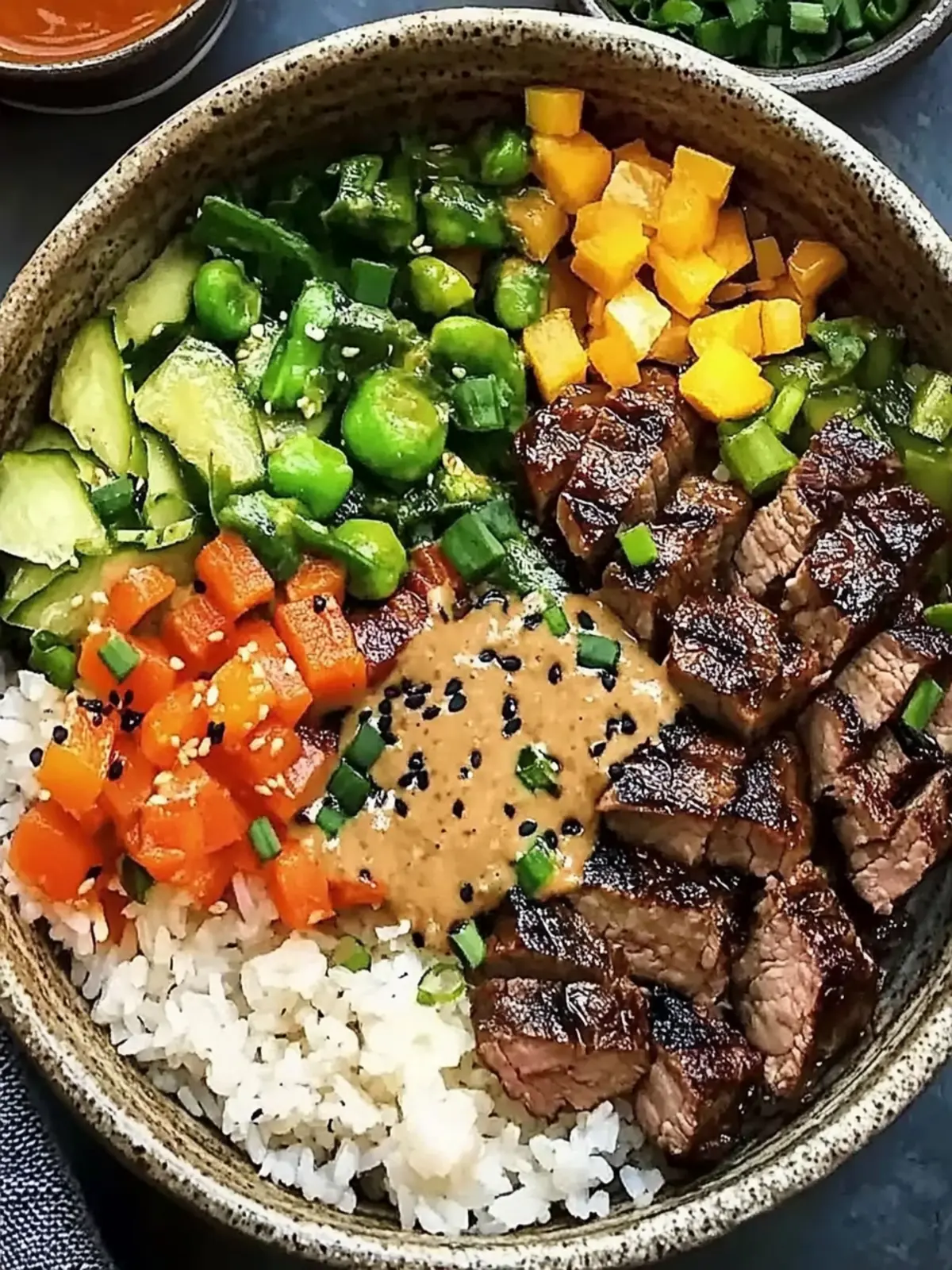
How to Store and Freeze Hibachi Steak Bowls
Fridge: Store leftover hibachi steak bowls in an airtight container for up to 3 days to maintain freshness and flavor.
Freezer: If you need to freeze, separate the components (steak, vegetables, rice) and freeze in airtight bags for up to 2 months for the best quality.
Reheating: To enjoy, thaw overnight in the fridge, then reheat in a skillet over medium heat until heated through, ensuring the steak doesn’t become tough.
Assembly Tip: For best texture, reassemble the bowls just before serving, so the ingredients remain fresh and vibrant!
Hibachi Steak Bowl Variations
If you’re looking to spice things up, there’s plenty of room for creativity in your hibachi steak bowls!
-
Gluten-Free: Swap soy sauce for tamari to keep the rich flavor while catering to gluten sensitivities.
-
Vegetarian Delight: Substitute ribeye or sirloin with grilled tofu or tempeh for a hearty yet meat-free option. It’ll soak up those flavorful sauces beautifully!
-
Heat It Up: Add sriracha or chili flakes to your sauce mix for a spicy kick that awakens your taste buds. A little heat can transform the entire dish!
-
Zesty Citrus: Squeeze some fresh lime or lemon juice over your bowls before serving for a bright burst of flavor that contrasts wonderfully with savory elements.
-
Crunchy Textures: Toss in some toasted nuts or seeds, like almonds or sunflower seeds, for an extra crunch. This added texture can elevate your meal to a whole new level.
-
Low-Carb Alternative: For a lightened-up version, swap cooked rice for cauliflower rice or zucchini noodles—delicious and low in carbs!
-
Seasonal Veggies: Embrace what’s fresh and local! Swap out the broccoli, bell peppers, and carrots for seasonal vegetables like asparagus, snap peas, or even butternut squash.
-
Sweet Twist: Drizzle a bit of hoisin or sweet chili sauce for a sweeter profile that complements the savory steak perfectly. It adds another layer of complexity to each bite!
Get creative and make these hibachi steak bowls uniquely yours!
Make Ahead Options
These hibachi steak bowls are perfect for busy home cooks looking to optimize their meal prep! You can slice the steak and chop the vegetables up to 24 hours in advance, storing them in airtight containers in the refrigerator to keep them fresh. The cooked rice can also be prepared ahead of time and kept in the fridge for up to 3 days. When you’re ready to enjoy your hibachi steak bowls, simply cook the steak and sauté the prepped vegetables as outlined in the recipe, adding the soy sauce and other flavorings just before serving to maintain that fresh, vibrant taste. With these make-ahead tips, you’ll enjoy a delicious meal with minimal effort!
Expert Tips for Hibachi Steak Bowls
-
Don’t Rush the Heat: Make sure your skillet or grill is properly heated before adding the steak. This ensures a perfect sear and enhances the flavors of your hibachi steak bowls.
-
Invest in a Meat Thermometer: Avoid overcooking by using a meat thermometer to check for doneness—medium-rare is best at 135°F (57°C) for a juicy steak.
-
Prep Ahead: To save time, slice your vegetables and steak in advance. Having everything ready makes the cooking process smoother and more enjoyable.
-
Balance Your Flavors: Taste and adjust seasonings before serving. Remember that using quality soy sauce and sesame oil can elevate your hibachi steak bowls to new heights!
-
Mix Up Your Vegetables: Feel free to get creative! Using seasonal vegetables not only adds variety but also ensures you get the freshest flavors in your dish.
-
Assemble Just Before Serving: To keep the ingredients fresh and vibrant, assemble your hibachi steak bowls just before enjoying. This way, everything stays crisp and delightful!
What to Serve with Hibachi Steak Bowls?
Elevate your meal with delightful sides and drinks that complement the rich flavors of hibachi steak bowls.
-
Creamy Mashed Potatoes: A classic comfort food, their smooth texture balances the hearty flavors of the steak bowls.
-
Garlic Butter Green Beans: Crisp green beans tossed in garlic butter add a fresh crunch and flavor burst that brighten the plate.
-
Cucumber Salad: This refreshing, crunchy side with a tangy dressing cuts through the richness of the dish, providing a perfect contrast.
-
Miso Soup: Warm and savory, miso soup is a traditional companion that echoes the flavors of Japanese cuisine, enhancing your meal experience.
-
Steamed Rice: Opt for jasmine rice infused with a bit of sesame oil; it’s a mild yet tasty addition that complements the strong flavors of the steak and sauces.
-
Roasted Sweet Potatoes: The natural sweetness of roasted sweet potatoes creates a delightful pairing with the savory steak, adding depth to your meal.
-
Chilled Sake: Enjoy a glass of chilled sake to enhance the hibachi dining experience, its subtle flavors perfectly matching your dish’s umami notes.
-
Chocolate Mousse: End your meal on a sweet note with rich chocolate mousse, balancing the savory elements of the bowls with a light and airy dessert.
With these pairings, you’ll create a dining experience that’s as satisfying as it is delicious!
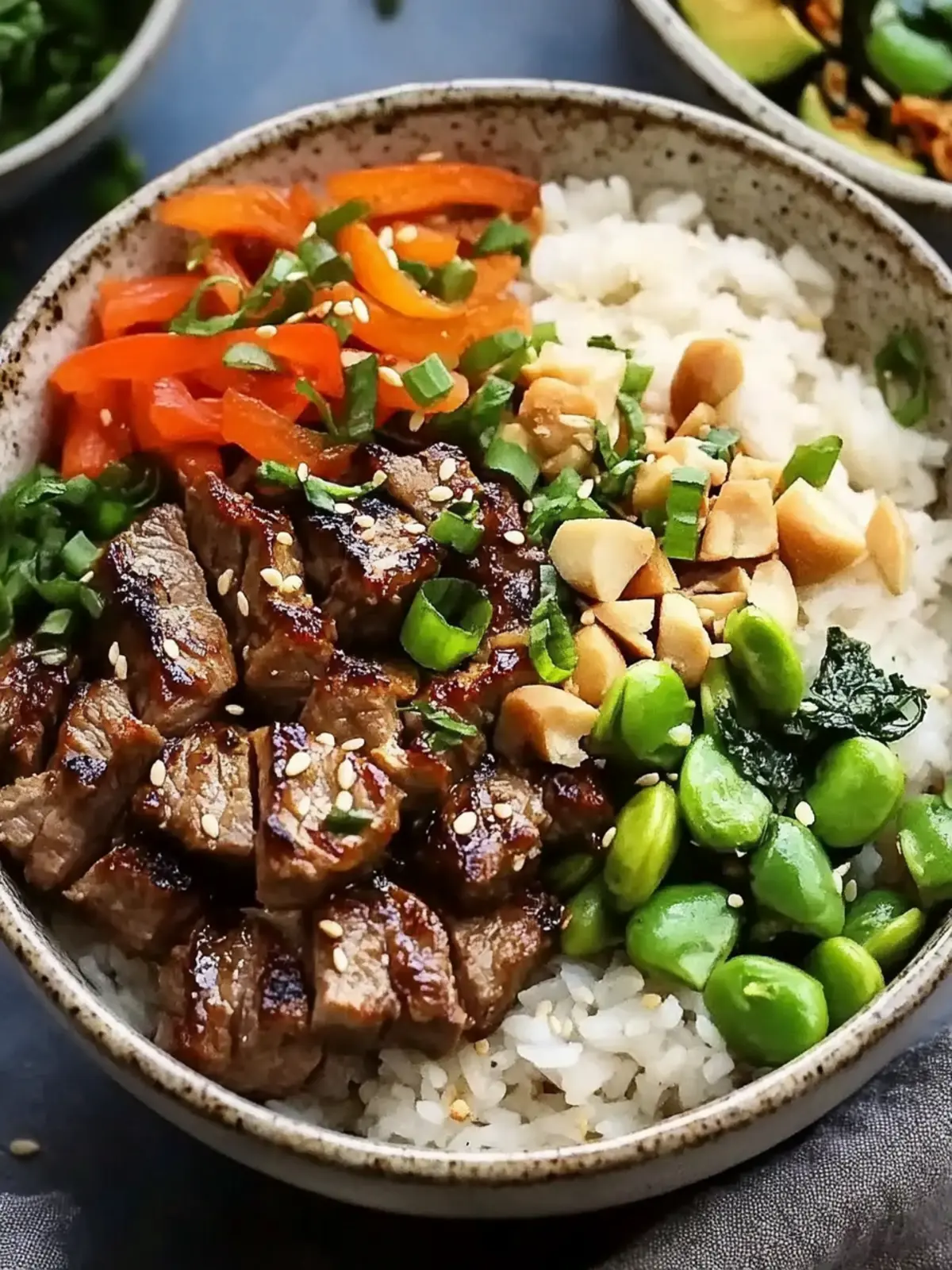
Hibachi Steak Bowls Recipe FAQs
What type of steak is best for hibachi steak bowls?
I recommend using either ribeye or sirloin steak for the best flavor and tenderness. Ribeye offers a rich, juicy experience, while sirloin is leaner but still delicious. If you’re looking for a different protein, chicken or tofu are great substitutes that work wonderfully in this dish!
How do I know if my vegetables are fresh enough?
When selecting vegetables like bell peppers and broccoli, look for vibrant colors and a crisp texture. Avoid any with dark spots or wilting leaves. Fresh broccoli should have a firm texture, and the flower heads should be tight and bright green.
How should I store leftover hibachi steak bowls?
To keep your hibachi steak bowls fresh, store the leftovers in an airtight container in the fridge for up to 3 days. It’s best to keep the components separate if possible to maintain the texture of the ingredients.
Can I freeze hibachi steak bowls, and if so, how?
Absolutely! For optimal quality, it’s best to freeze the components separately. Place the cooked rice, sautéed vegetables, and steak in airtight freezer bags. They can be frozen for up to 2 months. To reheat, thaw overnight in the fridge, then warm it gently on the stovetop over medium heat for even heating.
What if I have dietary restrictions, like gluten intolerance?
No worries! You can make these hibachi steak bowls gluten-free by using tamari instead of traditional soy sauce. Just ensure that any sauces or additional ingredients you choose are labeled gluten-free as well, and you can enjoy this delicious meal without concern!
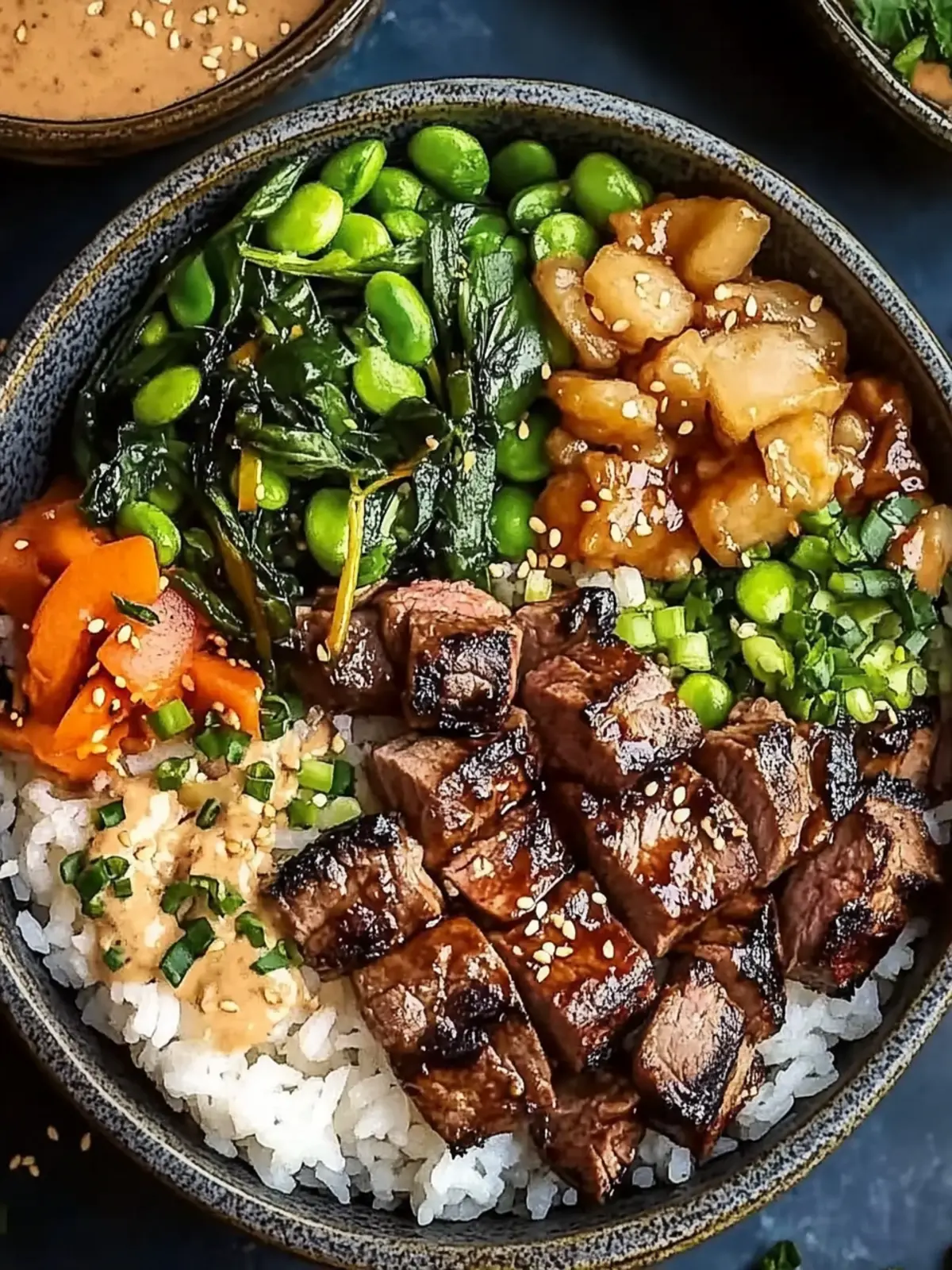
Sizzle Up Hibachi Steak Bowls for a Flavorful Feast at Home
Ingredients
Equipment
Method
- Prep Ingredients: Slice ribeye or sirloin steak into thin strips, and chop broccoli, bell peppers, and carrots. Have cooked rice ready.
- Cook Steak: Heat skillet or grill on high heat. Season steak with salt and pepper, then cook for about 3-4 minutes for medium-rare.
- Sauté Vegetables: In the same skillet, add broccoli, bell peppers, and carrots. Stir-fry for about 5 minutes until tender-crisp.
- Combine Flavors: Add soy sauce, sesame oil, garlic powder, and ginger powder, tossing to coat the veggies.
- Assemble Bowls: Layer cooked rice in bowls, top with sautéed veggies, and arrange the steak strips on top.
- Garnish: Sprinkle green onions and sesame seeds on top before serving.